lunes, 21 de noviembre de 2005

The state of the sprout

I wait all year for Brussels sprouts. Many pine away patiently for October’s first pumpkins or November’s puckery cranberries, but I hang my hopes on a fresh fall Brussels sprout. This stance no doubt puts me in a minority—a happy one, meaning that entire market displays of sprouts are mine, all mine—but really, the state of the sprout in America today is a sad, sad thing. If another Thanksgiving dinner ends with a platter of Brussels sprouts still sitting untouched, we clearly have a national emergency, not a national holiday, on our hands.

For many, the merest mention of Brussels sprouts conjures up childhood visions of bitter, mushy, nose-wrinkling wads of cruciferous terror. I’ve seen even the most ardent of food lovers shrink before a pile of the little green orbs. This unfortunate aversion usually stems from one of two roots. First, Brussels sprouts are often cruelly boiled past their bright, verdant prime into olive-green oblivion, turning even the sweetest sprout bitter. And when overcooking is not the culprit, many cases of Brussels sprout phobia can be attributed to simple seasonality. Though sprouts can be found in the supermarket nearly year-round, they are markedly better—sweeter, with tighter, more compact heads—in the cold months. According to the lovely folks at Willie Green’s Organic Farm, sprouts that have weathered the first frost are much tastier than their spring- or summertime counterparts, which explains why I wait all year to, come fall, get my fill.

And that’s exactly what I do. Sometimes I roast them, halved and tossed with olive oil and sea salt, in a hot oven; sometimes I halve and sauté them with chestnuts. I’ve eaten more than my fair share of Brussels sprouts braised and glazed with a handful of whole peeled shallots, and I’ve heard rumors of bewitchingly good blanched sprouts sautéed in butter with red grapes and toasted pecans. But when Thanksgiving rolls around, you’ll find me at the stove with a skillet of hashed Brussels sprouts with poppy seeds and lemon.


Tossed in a hot pan for a scant five minutes, the sprouts soften and give up their starchiness, wilting into a warm slaw scented with white wine and citrus. It’s a method my family stumbled upon several years ago, and a shoo-in for our holiday table. Come Thursday, we’ll unite in Oklahoma—Seattlites, New Yorkers, and those in between—to hash away at another year, giving thanks for another fall, another Brussels sprout, and a very happy minority.


Hashed Brussels Sprouts with Poppy Seeds and Lemon
Inspired by The Union Square Café Cookbook

This recipe has brought many skeptics over to the pro-sprouts team. If you find yourself likewise converted and hungry for more, try this, this, this, or this. A whole universe is opening before you.

About 1 ¼ lbs Brussels sprouts
1 ½ Tbs fresh lemon juice
2 Tbs olive oil
1 medium garlic clove, minced
1 Tbs poppy seeds
¼ cup white wine
¼ tsp salt

Cut the stems from the Brussels sprouts and remove any blemished leaves. When all the sprouts are trimmed, you should be left with about 1 pound total. Halve each sprout lengthwise, and slice each half into thin slices, about 1/8 inch thick; or, alternatively, hash them in a food processor fitted with the slicing disc attachment.

In a large bowl, toss the hashed Brussels sprouts with the lemon juice.

In a large skillet or sauté pan, warm the olive oil over high heat, almost to the smoking point. Stir in the hashed sprouts, garlic, and poppy seeds. Add the wine, and cook for about 3-4 minutes, stirring constantly, until the sprouts are bright green and lightly softened but still barely crunchy. Reduce the heat to low, season with salt, and cook for 1 minute more. Remove the pan from the heat, and serve.

Yield: About 4-6 servings.

jueves, 17 de noviembre de 2005

What it boils down to

Tell me what you eat, and I will tell you what you are. So spoke Jean Anthelme Brillat-Savarin, legendary French gastronome. On the surface, it sounds like some sort of cheap parlor game, or maybe a fortune teller’s scam at a traveling circus, but the man had a point. What we eat is an everyday testament to our personal, cultural, and, some would say, political, experience. There’s not much to argue with there. But I’ve been thinking lately, as I’m sometimes known to do, and I wonder if Brillat-Savarin’s snappy quip might lend itself to a modest—and seasonal—update. I’d like to propose a new parlor game, and it goes like this: tell me what you want for Christmas, and I will tell you what you are. We may be a week out from Thanksgiving, but as your local retailer would like to remind you, it’s never too early to draw up a list for Santa, or your mother. And just think of what you’ll learn about yourself—it’s better than psychoanalysis. I’ll demonstrate. This year, my list runs as follows:

a set of 4 ½-inch springform pans
a cake carrier

a comb
Bad Gal
underwear
Pilates sessions
fishnets
sausage-making attachments for KitchenAid mixer

Reading between the lines, this much is clear: I’m a woman who plans to bake and transport cakes, but who can’t be bothered to replace the comb she broke three weeks ago or the favorite black eyeliner that was stolen from her suitcase last May; who trusts her mother’s taste in lingerie; who values exercise and a solid supply of fishnets; and who, dear reader, is very, very serious about sausage. And though any of these points is worthy of infinite discussion, really, we both know where I’m headed. In the end, it usually boils down to sausage.

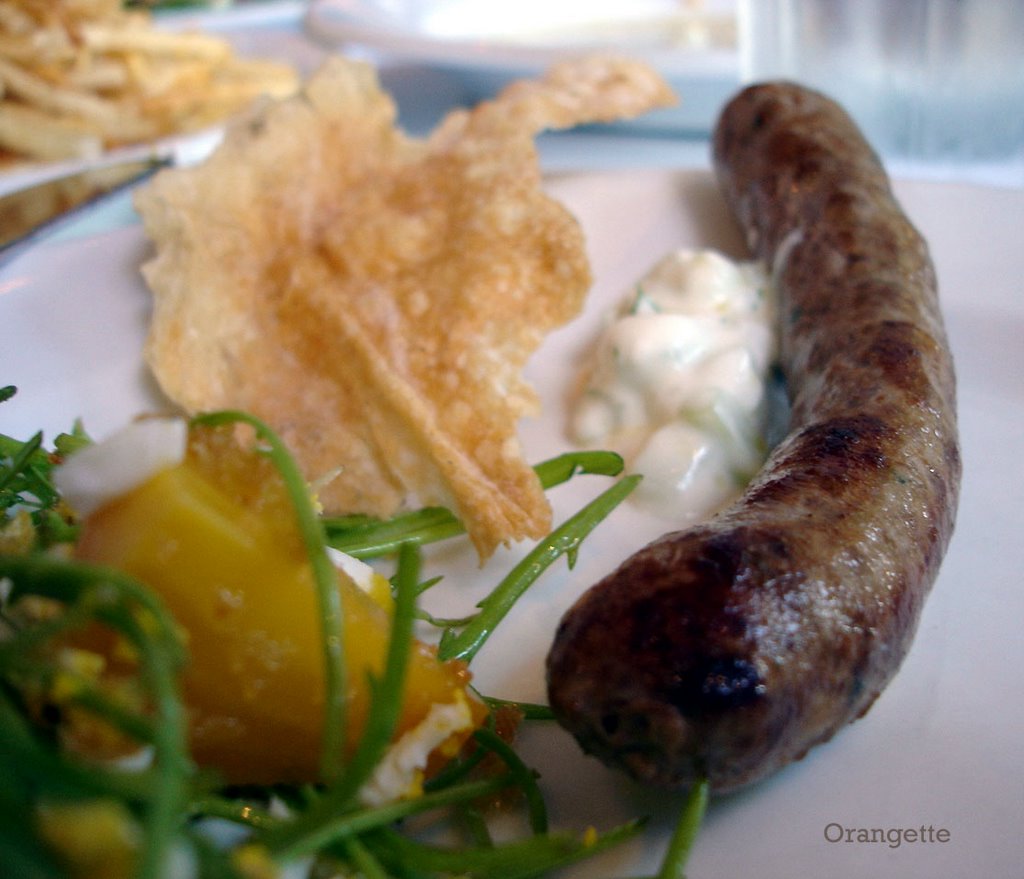
I’ve already written at blush-worthy length of my great love for the humble sausage, that ancient and noble by-product of efficient butchery. Though the exact origins of sausage—a word derived from the Latin salsus, meaning “salted” or “preserved”—are up for debate, it is believed to have been invented thousands of years ago, as early as 3000 B.C. The concept itself is ingenious, really, a sort of delicious pack-rattery practiced on meat whereby leftover scraps and typically unappealing parts—less tender meats, or organs—are ground or chopped, salted, spiced, and packed into casings traditionally made of animal intestines. But really, the details don’t much matter. Fresh or cooked, smoked or not, dried or wondrously juicy, nearly any sausage will get a sigh out of me, from the boiled bratwurst of my childhood, eaten with my father at our kitchen table, to a housemade lamb sausage with tzatziki and cracker bread at San Francisco’s Zuni Café. I’ve seared sausage, roasted it, and grilled it; I’ve stretched out on a picnic blanket in the Place des Vosges and eaten salami and sopressata; and, by god, I’ve nearly bathed myself in a fennel sausage sandwich at Salumi. And just when I thought it couldn’t get any better, I put two Italian sausages in a baking dish with a few handfuls of red grapes, and I slipped them into the oven.


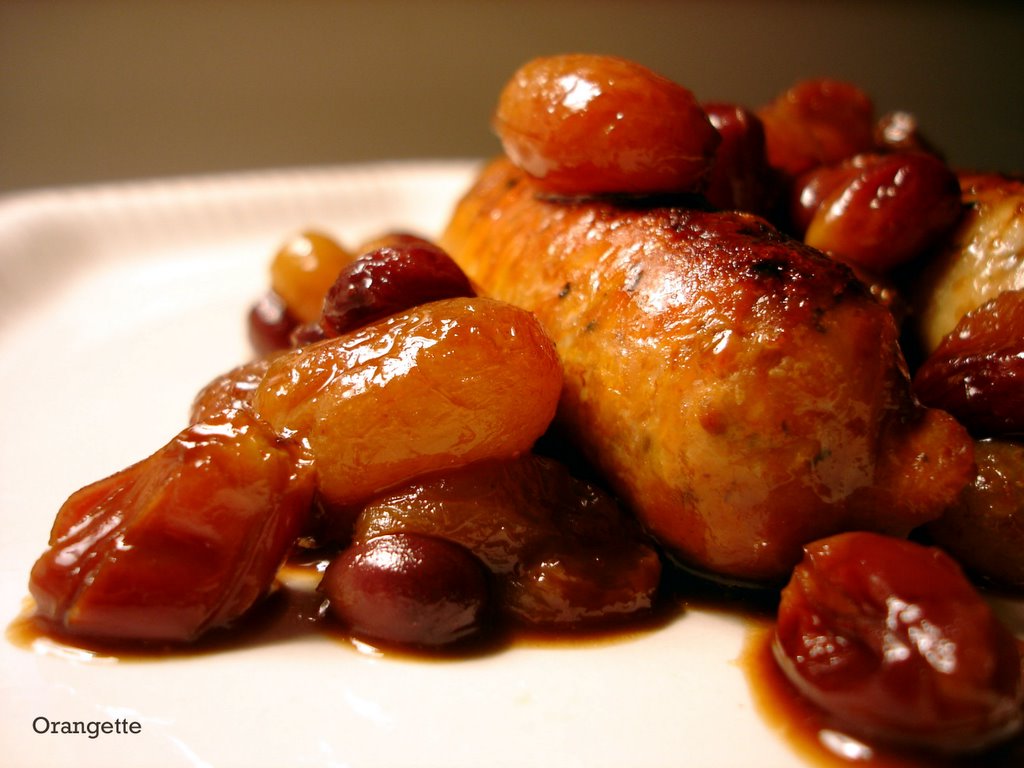
The grapes sizzled, sputtered, and melted into syrup, basting and braising the sausages in their bubbling juices. In the heat of the oven, they turned winy and complex, shiny-skinned and soft, their sweetness and perky acidity a perfect foil for the fatty, earthy meat. A sausage is a fine thing, but topped with stewy grapes, it’s worth its weight in fishnets—which, anyway, I may never wear again, if there’s sausage under the Christmas tree.


Roasted Sausages with Red Grapes
Inspired by Gourmet and Matthew Amster-Burton

I was astounded by this deceivingly simple dish. Be sure to choose good-quality sausages and flavorful grapes, and then let them work their magic. Serve this lusty stuff alongside boiled or mashed potatoes, or maybe roasted winter squash, and sautéed or braised winter greens.

2 mild chicken or pork Italian sausages, about 5-6 ounces each
½ lb red seedless grapes, preferably organic
2 scant Tbs olive oil
½ - 1 Tbs balsamic vinegar, or to taste
Salt

Preheat the oven to 475 degrees Fahrenheit.

Heat a heavy skillet, preferably cast-iron, over moderate heat until hot but not smoking. Lay the sausages in the skillet, and cook them, turning once, until nicely browned, about 8 minutes total.

While the sausages are cooking, remove the grapes from their stems, rinse them under cool water, drain them, and place them in a bowl. Add the olive oil, and toss.

When the sausages are browned, place them in an 8-inch square glass or ceramic baking dish, and dump the grapes on top of and around them. Slide the dish into the oven, and bake for 25 minutes, turning the sausages once after about 15 minutes.

Remove the pan from the oven, and move the sausages to a platter or individual plates. Pour the grapes and their juices into a small saucepan, season with a pinch of salt, and place the saucepan over medium-high heat, stirring, until the grapes bubble and sizzle and their juices are syrupy. Remove the pan from the heat, stir in the vinegar, and pour the grapes over the sausages. Serve.

Yield: 2 servings

martes, 15 de noviembre de 2005

Seattlest + Macrina = true love and ginger cake

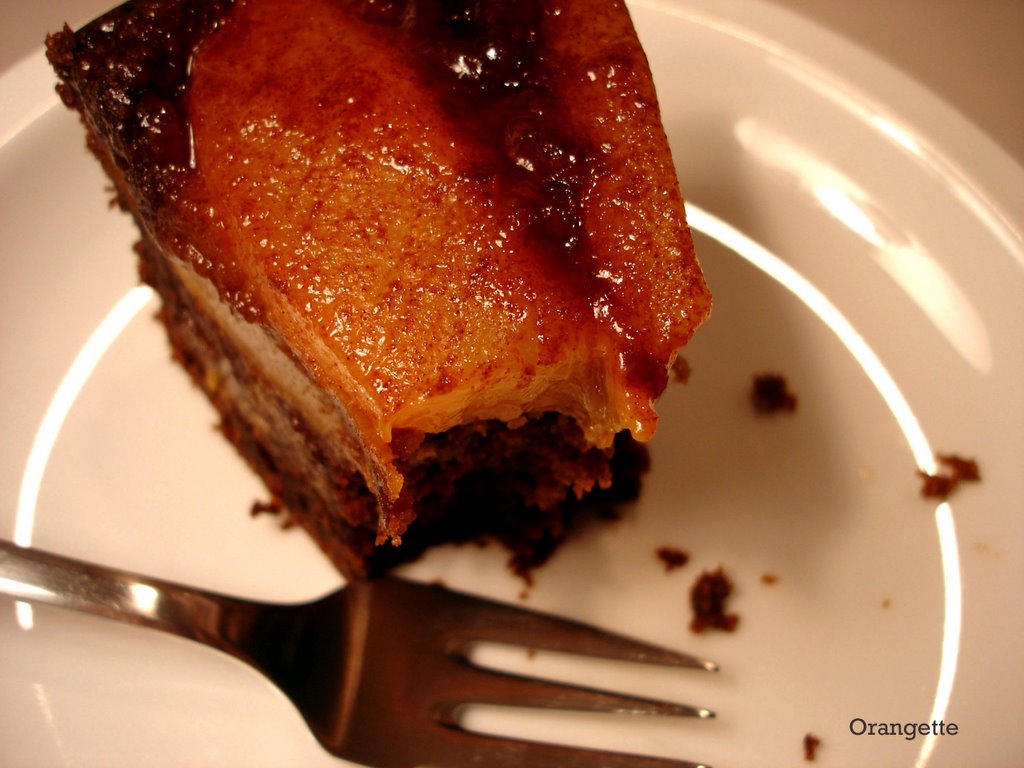
In this week’s Seattlest episode, I’m devouring a ginger pear upside-down cake from Leslie Mackie’s Macrina Bakery & Café Cookbook, a collection of recipes from one of Seattle’s best bakeries.


Lest you hesitate for even a second before following the link, I must tell you that this was one of the most delicious cakes I’ve eaten in recent memory. Big, buttery, and oozing with caramelized pears, it had a remarkably moist, not-too-sweet crumb and a subtle kick of fresh ginger. I took a handsome chunk of it to work yesterday and came home with nary a crumb. Something tells me that, come Thanksgiving, one of these could earn you a year’s worth of gratitude.

viernes, 11 de noviembre de 2005

In praise of braising

I’m not one for favorites. I have no favorite movie, no favorite color, no favorite number, no favorite song. Declaring something a favorite seems to freeze it unfavorably in time, mark it with an expiration date, foist it up onto a pedestal from which it will inevitably tumble when the next favorite comes along. Instead, I like to think of myself as more of an equal-opportunity appreciator. I have my preferences and my pets, certainly, but they are fluid, mutable, and therefore, I like to think, more fitting to the human condition.

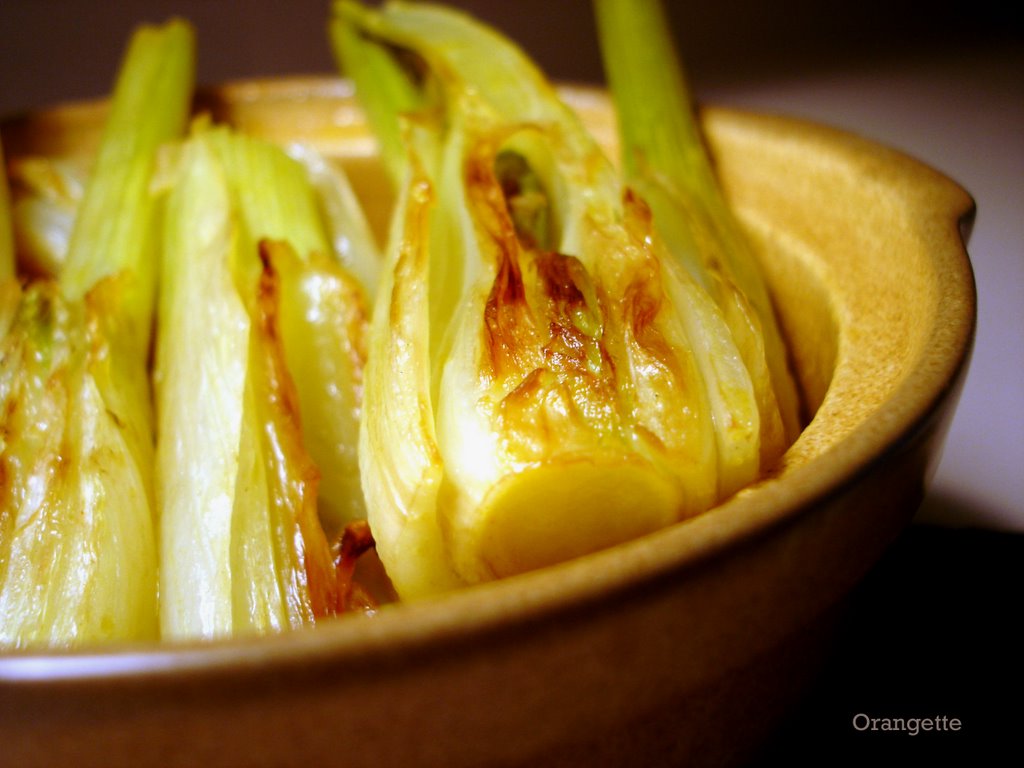
But, dear reader, I must make a shameful confession: come cold weather, I have a nasty bias toward braising. And though I hate myself a little for saying so, I’m starting to think this is a favorite cooking method in the making. I love to braise. There are few things—vegetable, animal, or otherwise—that don’t stand to benefit from a slow, barely simmering soak in some sort of aromatic liquid, myself included. When I was fifteen, I wrote an urgent, breathless poem about wanting to immerse myself in a vat of marshmallow creme, but today, I’d much rather a warm pool of gently rumbling broth, or wine, or both, preferably with an eye pillow. And short of that, I’ll settle for a plate of braised fennel, a seasonal favorite of my kitchen if ever there were one.


For many of us, fennel is an acquired taste. Until a few years ago, I was among those who consistently plead “no, thank you” at the merest whiff of the licorice-scented stuff. I am still no lover of licorice, but somewhere along the way, I was brought around to the pro-fennel camp. You won’t catch me biting into a bulb apple-style, like a man I once sat next to on an airplane, but otherwise, I’m a solid “yes, please.” Fennel’s crunch and sprightly anise flavor make it a regular in my salad bowl, with red oak-leaf lettuce and slivers of kalamata olives; with lemon, olive oil, and nubbles of aged Gouda; or tossed with Dijon vinaigrette and dusted with shards of toasted hazelnuts. But when cooked—or, more specifically, braised—it becomes something else entirely, something that, I’d dare to venture, could even win over those fennel-fearing stragglers. With a half-hour’s soak in simmering liquid, the high-pitched flavor and aroma of raw fennel give way to something rounder, more lingering, and more voluptuous, sweet, herbal, and mellow. The bulb cedes its crunch in favor of fork-tender softness and goes downright silky in a puddle of wine, broth, and olive oil.

And though I’d very much like to soften the season’s rainy chill with a dip in the braising pot myself, playing favorites with fennel will at least pass the time, and deliciously so.


Braised Fennel
Adapted from The Zuni Café Cookbook

While braised meats can take hours, braised vegetables are ready in only 30 or so minutes, making this type of preparation relatively quick and trouble-free. After a brief gilding in a skillet, the fennel slides into the oven and takes care of itself. It’s a set-it-and-forget-it operation. Choose smallish to medium bulbs, preferably not those seemingly steroid-pumped ones the size of Paul Bunyon’s fist, which tend to be woody and have loose layers. You want smooth, firm, white to light green bulbs that feel heavy for their size, with no shriveling or brown spots. Braised fennel is especially delicious with roasted birds or a nice pork roast, but frankly, I’ll take it alongside nearly anything. It also reheats beautifully in the microwave or, covered, in the oven.

3-4 fennel bulbs, each about 6-8 ounces, trimmed of stems and fronds
2-3 Tbs olive oil
About ½ cup dry white wine
About ½ cup good-quality chicken broth
Salt, preferably a good, flaky variety such as Maldon

Preheat the oven to 375 degrees Fahrenheit.

Cut the fennel into 1- to 1 ½-inch wedges, or, if you’re using smaller bulbs, quarter them.

Warm about 2 Tbs of olive oil in a large (preferably 12-inch) skillet over medium-low heat. Lay fennel wedges in one crowded layer in the pan, and cook them until they are golden on the bottom, about 5-10 minutes, and then flip them to gild the other side. Salt them lightly. As the fennel finishes browning, remove the wedges to a flameproof baking dish. You may need to brown the fennel in batches, adding oil as needed, until all of it is browned.

Arrange the fennel in a single, crowded layer in the baking dish. Add the wine and chicken broth in equal parts to reach a depth of ½ inch. Place the dish over medium heat, and bring the liquid to a simmer. Transfer the dish to the oven, and bake until the fennel is tender, about 20-30 minutes. Serve, with additional salt for sprinkling.

Yield: about 4 servings

lunes, 7 de noviembre de 2005

It’s raining, it’s pouring, and Seattlest is roasting

Over at Seattlest, I’m singing the praises of roasted chicken, a favorite cold-weather staple and, as luck would have it, one of the first meat preparations I tackled after bidding ado to my (pseudo) vegetarianism. Since that fateful day when I roasted my first chicken, I’ve tried a number of recipes, but the outright finger-licking, fall-down goodness of the simple Zuni Café method makes it my gold standard. And I can’t resist sharing.


P.S. On a side note: it appears, dear well-wishing reader, that my so-called
flu is actually mononucleosis. In light of this new development, I wanted to issue a sad preemptive warning: in the interest of getting more shut-eye, I may have to back off on posting for a week or two. Who knows, though; I’m still up and about and working, and a girl still has to eat—and therefore, write! We’ll see. In the meantime, thank you, as always, for checking in.

viernes, 4 de noviembre de 2005

A handy life strategy, dinner included

A few devoted readers may remember when, about eight months ago, in a post involving Spandex, my mother, erogenous zones, and whole wheat bread, I mentioned a woman named Sherry, an aerobics instructor for whom I once harbored a short-lived but memorable fascination. I was only five or six, too young to stay at home alone while my mother took her aerobics classes, but old enough to keep myself entertained in the back room of the gym—and to do some serious thinking about my life.

Sherry was the nicest, prettiest, and most approachable of the instructors. She had a soft, crinkly, playful voice, and her legwarmers always matched her elastic belt. Her shiny, dark brown hair was something straight out of a V05 Hot Oil ad, and she was engaged to a man who, I believed, looked like Ken. I was fascinated with Sherry. I wanted to be Sherry. First, I reasoned, I would have to change my name, and then we would have to spend lots of time together. This part would be very convenient, actually, because I had a plan. In the wilds of preschool, I had somehow come to believe that in order to get my driver’s license, I would have to pass a test requiring me to take apart a car and put it back together. This being far too daunting, I decided that when my time came, I wouldn’t bother with getting my license; instead, I’d get Sherry to drive me everywhere, and that way, we’d be together. So it was that I devised a handy life strategy: if being an adult looks too hard, I’ll just get a pretty lady to do it for me.

Today, two decades later, the inner workings of automobiles remain a mystery to me, but I do have a driver’s license and, happily, my given name. I must admit, though, that when adulthood—work, laundry, and staying awake on the bus, plus clothing, bathing, and feeding myself—starts to look grim, I still start looking for the pretty lady. And that, dear reader, is how I came to own a Nigella Lawson cookbook.

Had Nigella been around when I was a pre-pre-adolescent, smiling down reassuringly from the cookbook shelf, I would surely have been spellbound. And if someone had warned me that as an adult, I’d have to cook and feed myself three times a day, my answer would have been easy: I’ll let Nigella do it for me. Sure, she may be a tad obvious, what with all that coy finger-licking and cleavage, but when being a grown-up gets me down, she is the Sherry of my kitchen. Though she can’t actually pack my lunch or dish out my dinners, at least she can tell me what to eat and how to cook it. Her look may be more merry-widow Bed Head than V05, but her style is warm, inviting, and sensible; her food is easy-peasy approachable; and to cap it off, her recipes work—and beautifully too.

I have gladly slurped her simple pea soup; I’ve topped dozens of oatmeal cookies—not to mention some fingers—with her brown-butter frosting; and I’ve nearly forgotten all social graces before a slice of her chocolate banana cake, which no one should ever, ever, be asked to share. I even trust her with granola—a momentous declaration indeed, given that my breakfast is a ritual of the highest order. For years, I started my mornings with one granola—and one I still love dearly—but recently I’ve been cheating with Andy’s Fairfield granola from Feast. Nigella told me to. And when the dim, damp, doggedly tiring days of fall have left me with little enthusiasm for the kitchen, I’ve settled into the couch with one of her cookbooks and emerged refreshed, with a pair of chopsticks and a plate of her red seasonal salad.


Now, if only there were a pretty lady to do the dishes.


Red Seasonal Salad
Adapted from Feast, by Nigella Lawson

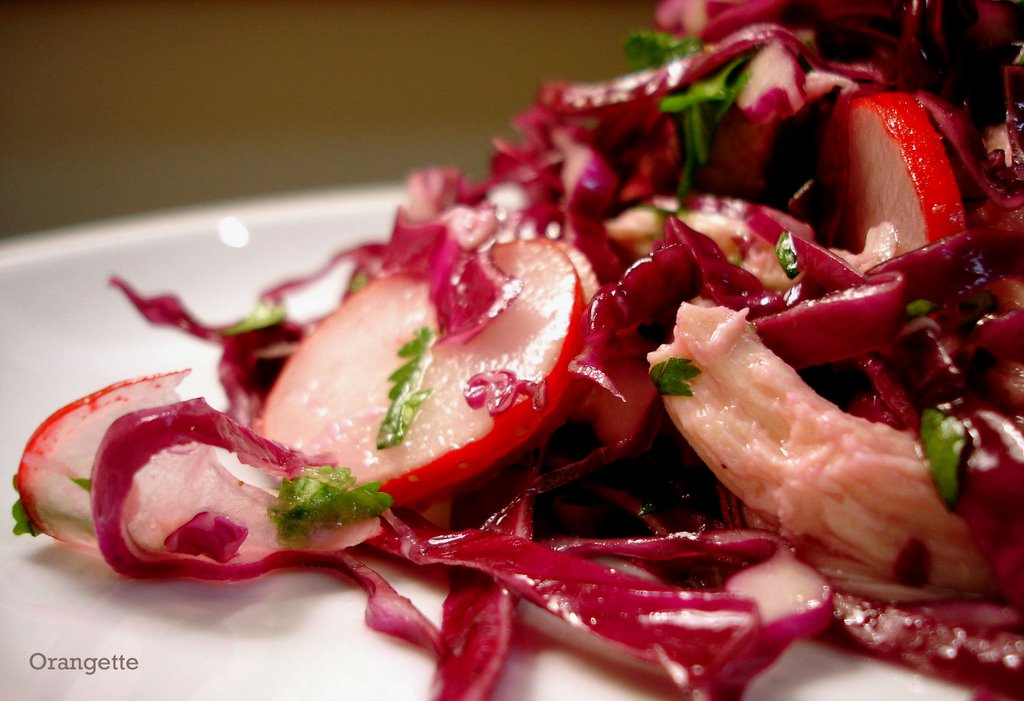
Nigella Lawson has quite a way with Vietnamese-inspired flavors, and this salad is ample proof. If you’re anything like me, you’ll find yourself in an all-out chopstick assault, pinching and plucking up punchy mouthfuls of cabbage, red onion, radish, and cold chicken doused with fish sauce, lime, chiles, garlic, and cilantro. The original recipe calls for cooked turkey, which, come Thanksgiving, can be found in abundance across the U.S., but for everyday purposes, I prefer chicken. This is, after all, a winter salad, and nothing fits the season better than a roasted chicken.

2 red chiles (often labeled Thai chiles), seeded and finely chopped
1 clove garlic, minced
2 Tbs superfine sugar
3 tsp rice vinegar
3 Tbs fresh lime juice
4 Tbs fish sauce
3 Tbs vegetable oil, such as canola or grapeseed
1 red onion, peeled, halved, and very thinly sliced
Freshly ground black pepper
4 cups cold cooked turkey or chicken, shredded
1 ½ lbs red cabbage, quartered, cored, and very thinly sliced (about 8 cups, sliced)
½ lb red radishes, thinly sliced into rounds
¼ cup chopped fresh cilantro

In a very large bowl, whisk together the chiles, garlic, sugar, vinegar, lime juice, fish sauce, and oil. Add the red onion and a grind or two of black pepper, stir to immerse the onion slivers in liquid, and set aside to steep for 15 minutes. Add the shredded turkey or chicken, and leave to steep for another 15 minutes. Add the cabbage and radishes, and toss gently to coat with dressing. Add about half of the cilantro, and toss to mix. Serve, topping each portion with a bit of the remaining cilantro.

Leftovers of this salad keep surprisingly well—though they do lose a bit of pep and crunch—for up to two days in the refrigerator, sealed in an airtight container.

Yield: about 8 servings

lunes, 31 de octubre de 2005

Joining the club: Seattlest

Sometimes details escape me, such as when I’m engaged in heated battle with a virus. For example, I have—until today—completely forgotten to announce, dear hungry reader, that you can now also find me and my writing over at Seattlest, a sibling of New York City’s illustrious group blog Gothamist, San Francisco's SFist, Paris's Parisist, and the rest of the -ist gang.

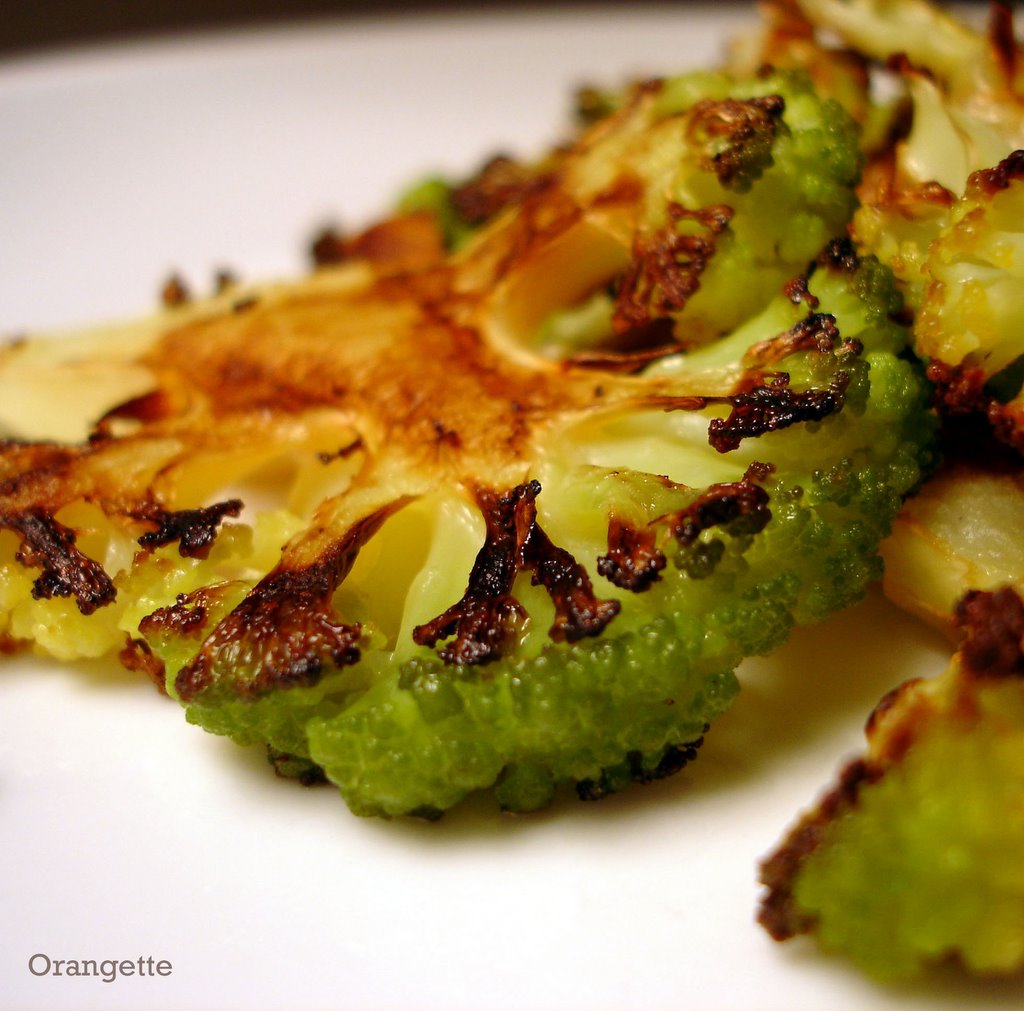
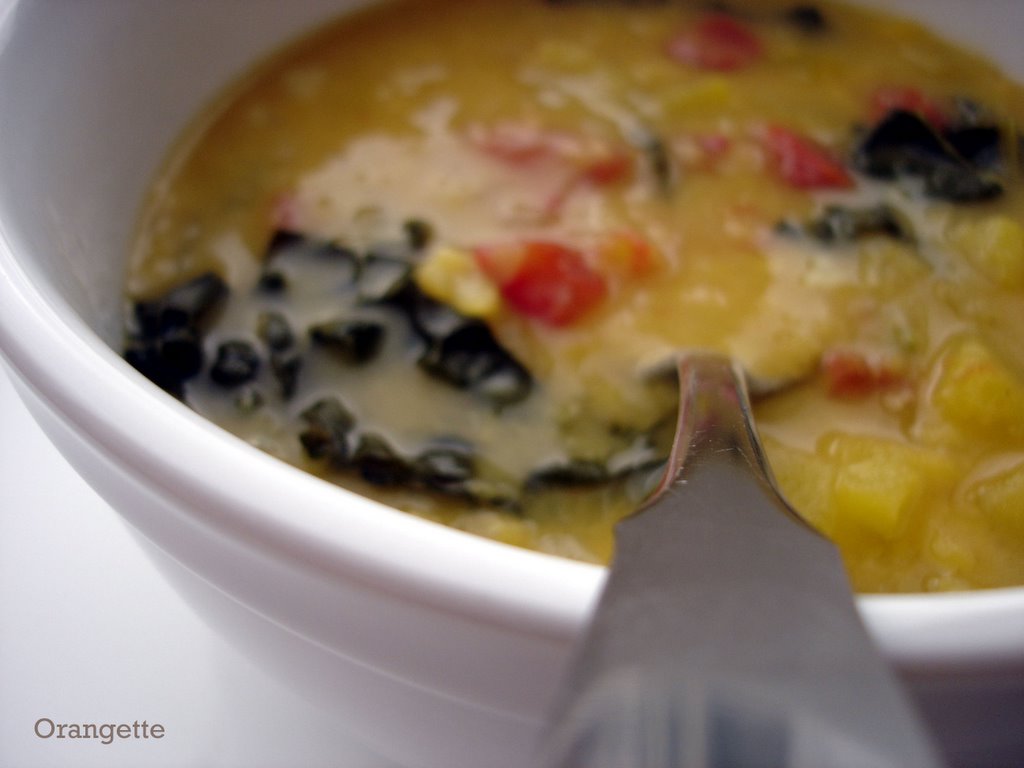
I'll be contributing weekly food pieces focused mainly on seasonal recipes and cooking, broadcasting from my kitchen, as usual. In my first article, I extolled the virtues of caramelized cauliflower, one of my favorite fall standbys and the recipe to turn to when you want to watch a sworn cauliflower hater literally eat his words. This week I turn to yellow split pea soup with winter squash and kale, a warming brew that, along with cacio e pepe and my old faithful buttered toast with honey, recently sustained me through several flu-fraught days.

I hope you’ll come visit.